Mamawe is a women’s wellness brand that offers natural products designed to support physical and mental well-being, with an emphasis on care, health, and hormonal balance. The company aims to build genuine connections with its customers through empathetic communication, educational content, and a seamless, accessible digital experience.
Challenge
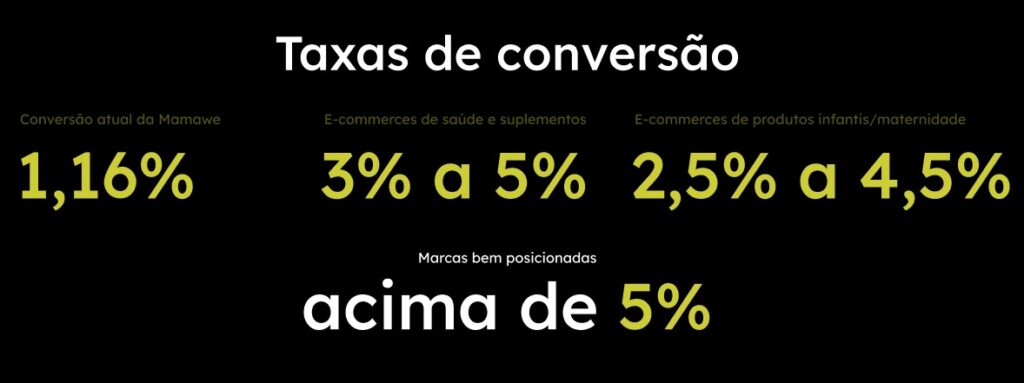
The client identified a lower-than-expected conversion rate in its e-commerce store and requested an in-depth usability analysis focused on identifying friction throughout the purchase journey. Our research confirmed a conversion rate of 1.12%, while comparable products in the same category achieved rates of 5% or higher.
Hypothesis
We suspected that the site’s structure was creating cognitive barriers, making navigation and checkout more difficult – even for simple tasks such as finding products or accessing ingredient information.
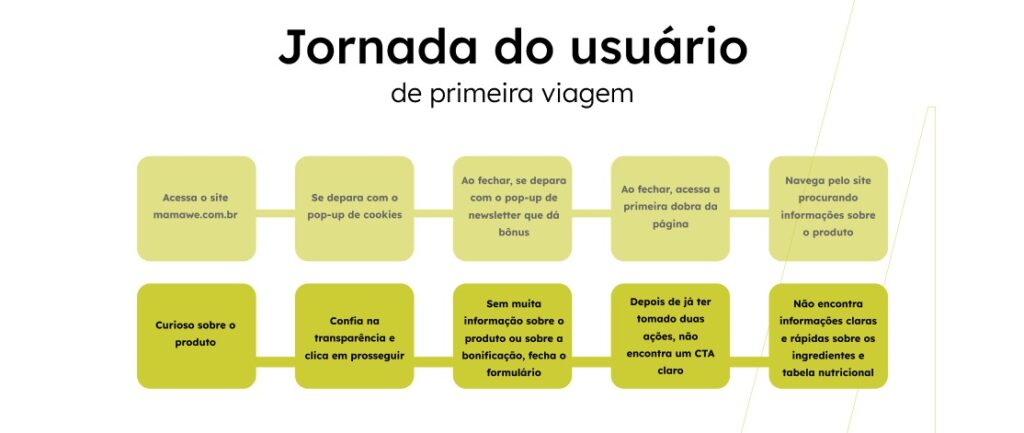
Based on this hypothesis, we mapped the user journey and identified points of friction between users and their goals.
Diagnosis and Analysis
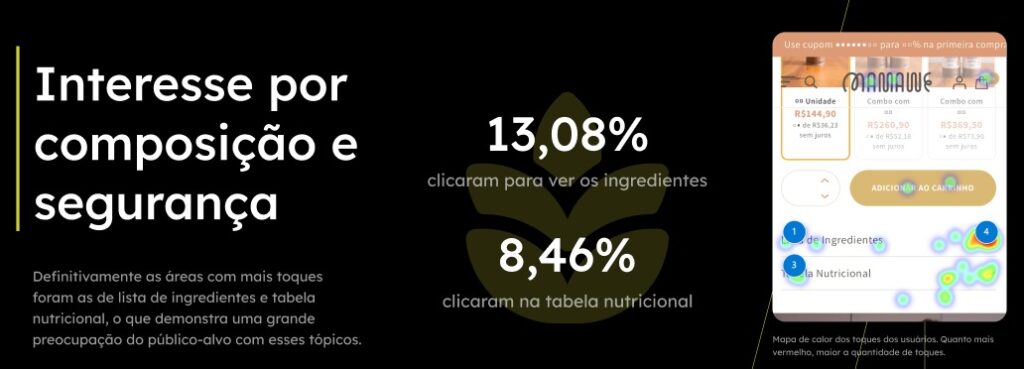
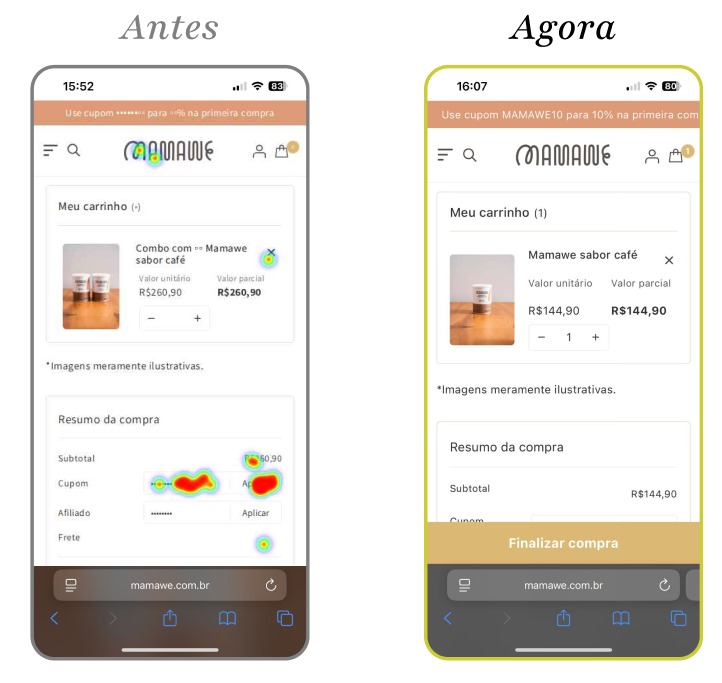
I installed Microsoft Clarity to analyze real-time session recordings and heatmaps. In parallel, I used Nielsen’s 10 usability heuristics as the foundation for a comprehensive heuristic evaluation of all key pages.
I also mapped the journeys of different user profiles, including:
Users who already know what they want to buy;
Users researching ingredients;
Users who want to learn more about a product before purchasing.
The analysis revealed:
Too many clicks required to complete a purchase;
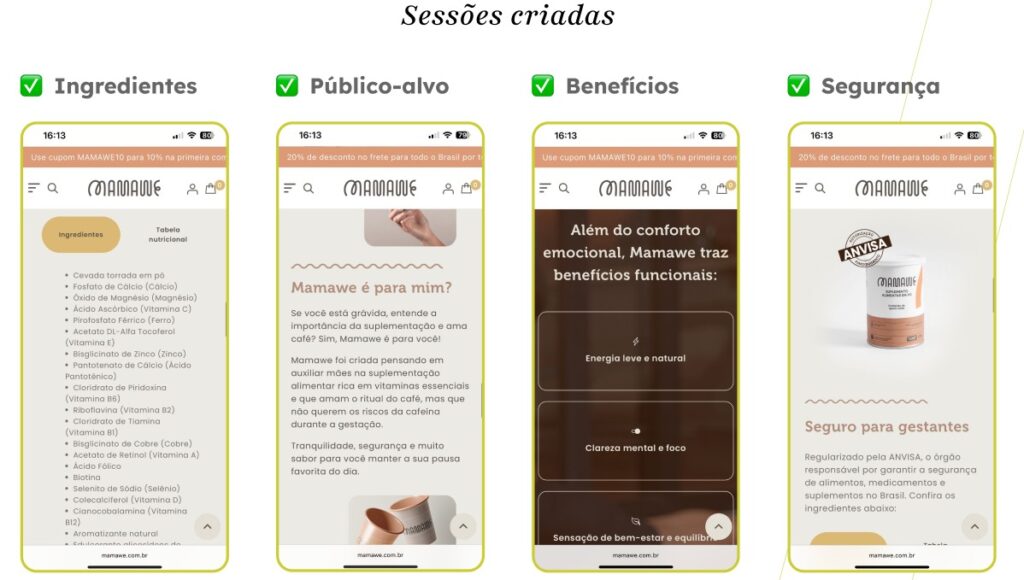
High demand for ingredient and nutrition information;
Poorly positioned interface elements or elements that caused confusion;
Inconsistent layouts across pages, making it harder for users to orient themselves.
Proposed Improvements
Based on the insights gathered, I presented the client with a set of recommendations focused on:
Reducing the number of steps required to reach checkout;
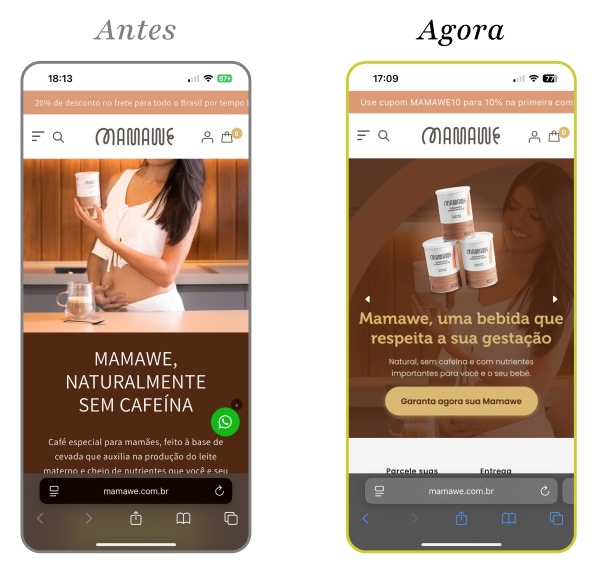
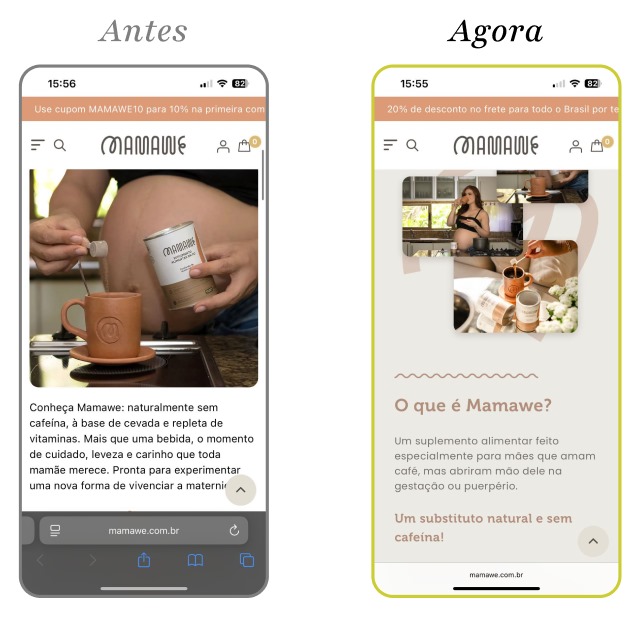
Standardizing the interface and improving the information hierarchy;
Improving accessibility and language to create a more seamless experience.
The proposals were approved and are currently being implemented and evaluated through A/B testing.
Testing
We tested the flow through internal simulations and with users in a controlled environment. We primarily evaluated response times, flow comprehension, and expected behaviors, then implemented the improvements in the e-commerce store. We are now analyzing the results.